
At Orvionyx AI, we believe healthcare should be proactive, intelligent, and always one step ahead. Powered by advanced Agentic AI solutions, healthcare organizations can predict issues, automate critical decisions, and take action before challenges impact patient care.
Unlike traditional AI models such as machine learning, NLP, deep learning, and computer vision that focus on predefined tasks, Orvionyx AI delivers autonomous AI agents capable of analyzing real-time healthcare data, adapting to changing conditions, and supporting medical teams with intelligent decision-making.
Our Agentic Automation solutions help hospitals, clinics, and healthcare providers streamline workflows, improve operational efficiency, reduce administrative overhead, and enhance patient outcomes. From predictive diagnostics and automated patient engagement to treatment optimization and emergency response coordination, Orvionyx AI empowers healthcare professionals with smarter, faster, and more connected systems.
Designed for high-pressure healthcare environments like emergency rooms and intensive care units, our AI-powered healthcare automation platform enables seamless care coordination, real-time monitoring, intelligent workflow automation, and proactive patient management.
With Orvionyx AI, healthcare organizations can unlock the full potential of AI-driven healthcare transformation, delivering personalized patient experiences, faster clinical decisions, and scalable operational excellence.
What is Agentic AI in Healthcare?
In the healthcare industry, “Agentic AI” refers to intelligent AI systems operating independently, making decisions, and acting based on objectives without constant human supervision. These advanced systems are designed to proactively analyze patient data, predict outcomes, and automate healthcare processes such as follow-up appointments, treatment plan adjustments, and patient care coordination.
Agentic AI improves operational efficiency, supports clinical decision-making, and enhances patient outcomes across hospitals, clinics, and healthcare organizations by operating autonomously while following healthcare compliance standards and medical protocols.
What Kind of AI is Used in Healthcare?
The healthcare industry utilizes advanced AI technologies such as machine learning, deep learning, natural language processing (NLP), and computer vision to optimize healthcare operations and improve patient care. These AI models support predictive diagnostics, medical image analysis, virtual healthcare assistants, clinical data processing, and administrative workflow automation across hospitals and healthcare organizations.
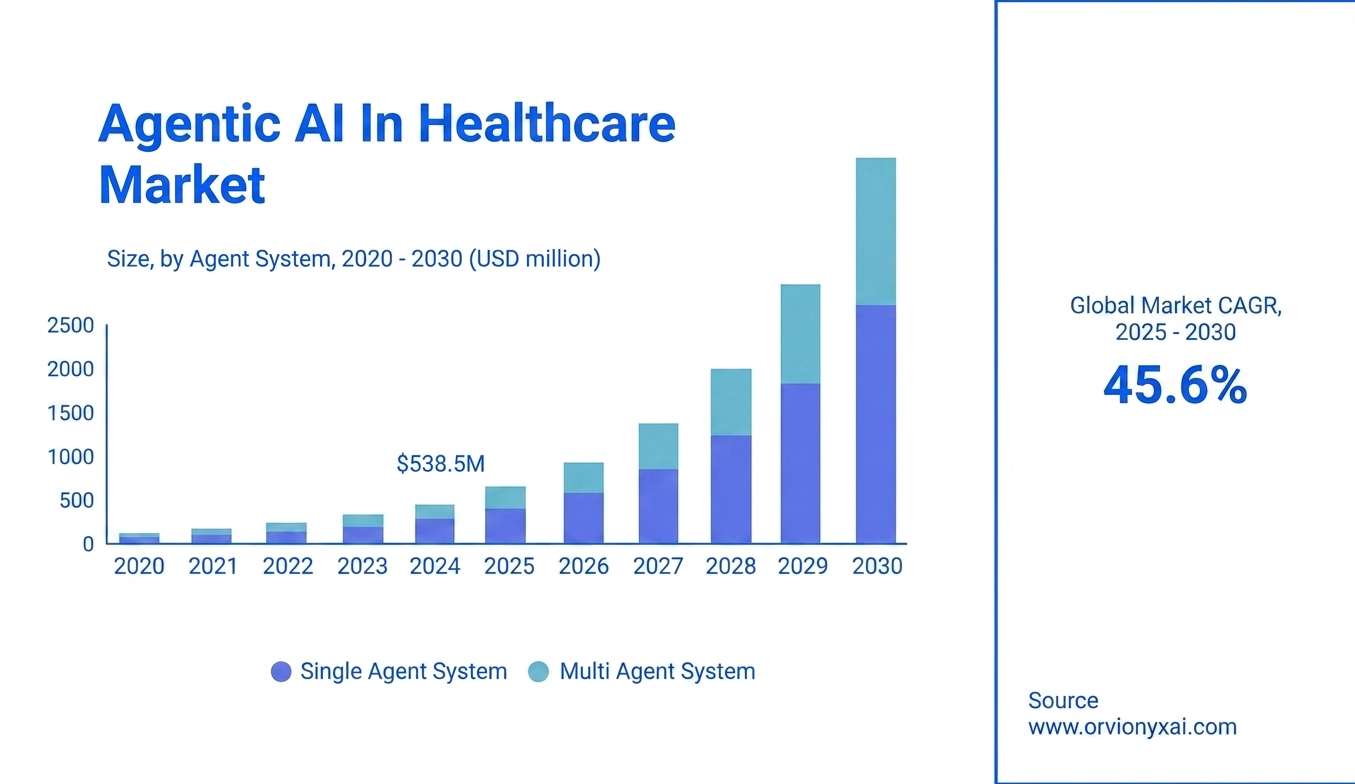
Agentic AI in healthcare goes beyond traditional AI automation by enabling intelligent systems to not only analyze data but also take proactive action through autonomous decision-making and goal-driven reasoning. These advanced AI systems can identify health risks, schedule follow-up appointments, recommend treatment plan adjustments, and actively manage patient care workflows in real time.
This evolution is especially critical in high-pressure healthcare environments such as emergency rooms and intensive care units, where rapid clinical decisions can save lives. Powered by real-time healthcare data and contextual intelligence, Agentic AI helps healthcare providers prioritize patient needs, optimize resource allocation, automate care coordination, and initiate time-sensitive medical interventions with greater speed and accuracy.
Benefits of Agentic AI in Healthcare
By delivering intelligent healthcare automation that extends beyond traditional AI systems, Agentic AI is transforming both clinical operations and patient care management across the healthcare industry. These advanced AI agents can analyze real-time data, adapt to changing conditions, make autonomous decisions, and execute actions independently to improve healthcare efficiency and patient outcomes. As a result, healthcare organizations benefit from faster workflows, smarter resource management, and more responsive care delivery. Here are some of the key benefits:
Autonomous Decision-Making
One of the most transformative benefits of Agentic AI in healthcare is its ability to operate autonomously with minimal human intervention. These intelligent AI agents can make real-time decisions based on patient data, clinical insights, and healthcare protocols to automate tasks such as treatment plan adjustments, follow-up scheduling, diagnostic testing, and patient care coordination.
By reducing repetitive administrative work and streamlining healthcare workflows, Agentic AI allows healthcare professionals to focus more on critical decision-making and personalized patient care. This leads to improved operational efficiency, faster response times, and better patient outcomes across hospitals, clinics, and healthcare systems.
Personalized Patient Care
Agentic AI enables personalized healthcare by continuously analyzing patient genetics, medical history, lifestyle patterns, and treatment responses to create intelligent, data-driven care plans. Unlike traditional one-size-fits-all approaches, these AI-powered healthcare systems can adapt treatment strategies in real time, helping healthcare providers deliver more accurate, personalized, and effective patient care.
This dynamic approach improves clinical outcomes, enhances patient satisfaction, and supports precision medicine across hospitals, clinics, and healthcare organizations through real-time healthcare analytics and intelligent care coordination.
Proactive Health Management
Agentic AI enables proactive healthcare by identifying risks before symptoms become severe. By analyzing vital signs, patient behavior, and healthcare trends in real time, these intelligent systems can detect early warning signals and initiate timely interventions before conditions worsen. This approach is especially valuable for chronic disease management, preventive healthcare, and post-operative patient monitoring across modern healthcare environments.
Streamlined Administrative Processes
Agentic AI significantly improves healthcare administration in addition to supporting clinical operations. Intelligent AI agents can automate appointment scheduling, insurance verification, patient onboarding, medical billing, and healthcare documentation to reduce manual workload and streamline operational efficiency. This allows healthcare staff to focus more on high-value tasks, patient engagement, and delivering better healthcare experiences.
Improved Accuracy
As agentic AI systems use a vast amount of historical and real-time data, they are able to make extremely accurate suggestions for diagnosis and therapy. They keep learning from every new piece of information, which lowers the possibility of human error and promotes evidence-based medical judgment.
Benefits of Agentic AI in Healthcare
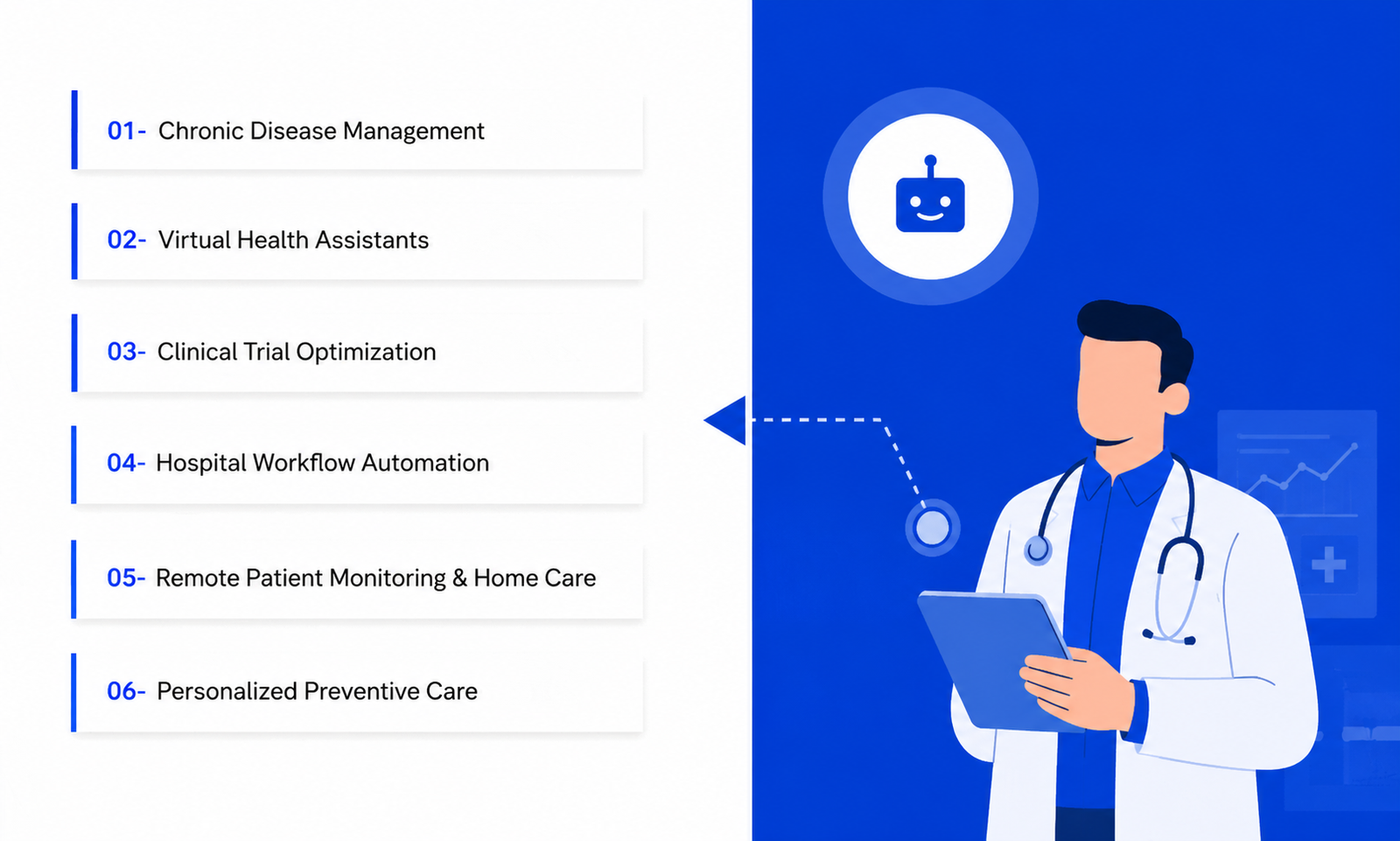
Agentic AI is transforming the healthcare industry through real-world applications across clinical care, hospital operations, and patient management. These intelligent AI systems go beyond simple task automation by understanding objectives, analyzing context, making autonomous decisions, and executing actions with minimal human intervention.
From predictive patient monitoring and personalized treatment planning to healthcare workflow automation and administrative support, Agentic AI is being integrated across multiple healthcare environments. These AI-powered systems help healthcare providers improve operational efficiency, accelerate clinical decision-making, enhance patient experiences, and deliver smarter, data-driven healthcare services.
Here are some top use agentic AI use cases in healthcare:
Here are some top use agentic AI use cases in healthcare:
Chronic Disease Management
Chronic conditions such as diabetes, heart disease, and asthma require continuous monitoring and timely intervention. Agentic AI systems continuously analyze patient data from wearable devices, daily health reports, and medical records to identify early signs of health deterioration.
When immediate action is needed, these intelligent AI agents can alert patients or healthcare teams, adjust treatment plans, and recommend lifestyle changes automatically, improving patient outcomes while reducing hospital admissions and supporting proactive chronic disease management.
Virtual Health Assistants
Agentic AI-powered virtual health assistants are more advanced than traditional chatbots and interact with patients in personalized, human-like ways. They answer health questions, provide medical information, schedule appointments, send medication reminders, trigger follow-ups, and notify doctors when needed.
By acting as always-on digital assistants, they improve patient engagement, boost adherence to care plans, and enhance overall healthcare experience.
Clinical Trial Optimization
Managing patient recruitment, compliance, and data tracking is essential for successful clinical research. Agentic AI simplifies this by handling informed consent, monitoring trial progress, and identifying eligible participants through EHR (Electronic Health Record) analysis.
It can also adjust study protocols in real time based on participant feedback and responses, reducing dropout rates and accelerating the development and adoption of new treatments.
Hospital Workflow Automation
Through the management of complex medical logistics, agentic AI increases operational efficiency. In scheduling surgeries around the availability of personnel, agents manage room assignments in real-time according to patient priorities while guaranteeing that all resources, including equipment and drug stocks, are used optimally.
By pre-emptively resolving bottlenecks and reallocating resources, Agentic AI ensures that the hospital ecosystem runs smoothly.
Personalized Preventive Care
Able to spot health risks long before they become serious to mitigate long-term effects on health and promote well-being, agentic AI excels in this sort of work. Integrating genetic factors, lifestyle choices, environmental exposures, and real-time health metrics, these systems will develop personalized preventive care plans, including wellness routines, vaccination schedules, mental health check-ins, and dietary recommendations.
Remote Patient Monitoring and Home Care
As telemedicine and home-based care continue to grow, Agentic AI plays a key role in remotely monitoring patient health. These systems collect data from mobile apps, wearable devices, and home sensors, then autonomously act on the insights in real time.
They can schedule virtual consultations, remind patients to take medications, and alert healthcare providers or emergency services when vital signs exceed safe limits. This ensures continuous, proactive care delivery, especially for elderly and high-risk patients, improving safety and healthcare outcomes.
Want to implement Agentic AI in your organization?
Key Considerations and Challenges of Implementing Agentic AI in Healthcare
Agentic AI offers great potential for healthcare. However, its realization brings with it a unique set of disruptions. Autonomously deciding systems need to be introduced with plenty of consideration, regulation, and continuous evaluation in sensitive, high-stakes contexts like healthcare.
The following would be among the key issues and concerns confronting healthcare institutions:
Data Privacy and Security
Agentic AI systems require continuous access to large volumes of sensitive patient data, including test results, wearable device readings, genetic information, electronic health records, and more. This raises significant concerns around data privacy, security, and responsible data usage in healthcare environments.
To ensure safe deployment, healthcare organizations must strictly follow data protection regulations such as GDPR in the EU and HIPAA in the U.S., implementing strong safeguards, encryption, and compliance frameworks to protect patient confidentiality and maintain trust in AI-powered healthcare systems.
Regulatory Hurdles
Agentic AI finds itself frequently subjected to more stringent regulatory surveillance than its conventional healthcare tools, given its capacity for autonomous decision-making. To be granted endorsement by medical regulatory agencies such as the FDA, clinical trials, robust validation, and an explanation of the AI’s decision-making rationale would be warranted.
Bias and Fairness
AI systems perform better when trained on representative data. Conversely, if the datasets used for training are biased, this will result in AI systems producing biased outputs that can result in health inequities along lines of age, gender, or ethnicity.
Human Oversight and Accountability
While Agentic AI systems are becoming highly capable in healthcare, human oversight must still remain essential. The ultimate control and decision-making authority should stay with qualified healthcare professionals to ensure patient safety, clinical accuracy, and ethical responsibility in all medical actions and AI-assisted care processes.
Interoperability with Existing Systems
EMRs, diagnostic software, appointment platforms, and billing tools are just a few of the IT systems that healthcare providers frequently employ. It can be technically challenging to integrate agentic AI for healthcare with these outdated systems.
How Agentic AI is Shaping the Future of Healthcare
The ability of intelligent systems to act autonomously, adapt to real-time healthcare data, and support both patients and clinicians is reshaping the future of healthcare through Agentic AI. These AI agents are actively contributing to more proactive, efficient, and personalized healthcare delivery, from faster diagnostics and individualized treatment to intelligent clinical decision-making and streamlined healthcare operations.
Enables real-time, personalized patient care
Supports faster and more accurate clinical decisions
Automates routine administrative and administrative healthcare tasks
Improves chronic disease monitoring and long-term condition management
As this technology continues to evolve, its role in healthcare will expand further, moving the industry toward a more patient-centered, responsive, and data-driven care ecosystem.
Agentic AI in healthcare represents the future of intelligent growth and transformation. With agentic automation experts like Orvionyx AI, healthcare organizations can accelerate adoption and integration of advanced AI systems. Our team supports end-to-end implementation to ensure smooth, reliable, and scalable AI-driven healthcare transformation.
FAQ's
How is agentic ai transforming the healthcare industry?
Agentic AI is changing healthcare by automating decision-making, enhancing patient care via predictive analytics, and streamlining administrative processes for increased operational effectiveness.
What are some real-world applications of agentic ai in healthcare?
Agentic AI has practical uses in healthcare, including patient monitoring, individualized treatment suggestions, autonomous diagnosis, and simplifying administrative duties like scheduling and accounting.
What’s the difference between traditional AI and Agentic AI in healthcare?
While traditional AI usually needs human oversight for decision-making, agentic AI in healthcare can make decisions on its own and act in real-time.
Are there compliance challenges in adopting Agentic AI in healthcare?
Yes, using agentic AI in healthcare poses compliance issues, especially regarding protecting patient privacy, adhering to legal requirements, and preserving openness in AI decision-making.
Can Agentic AI integrate with existing EHR or hospital systems?
Yes, agentic AI can interact with hospital or EHR systems to improve data analysis, decision-making, and workflow automation without interfering with the current infrastructure.